Making Care More Accessible: Interpreter Services at Diagnostic Imaging Northwest
Clear communication is an important part of quality health care. When patients understand what to…
 Menu
Menu
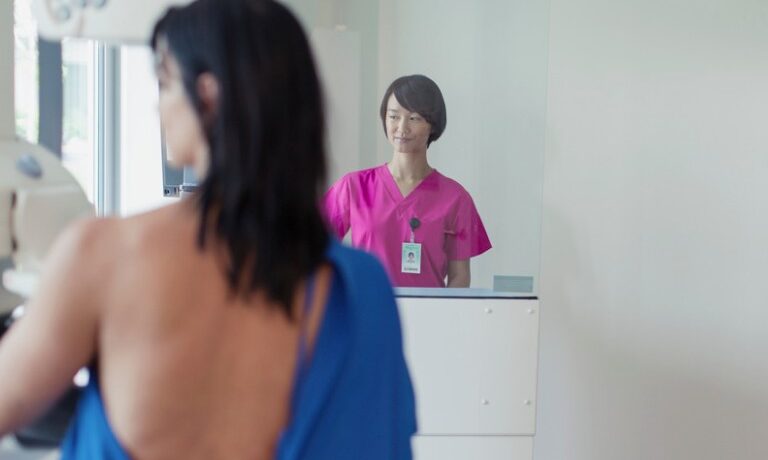
Women’s Health Month is the perfect reminder to prioritize preventive care — and that includes breast health. Mammograms remain one of the most important tools for detecting breast cancer early, often before symptoms are noticeable. Still, many women avoid or delay screenings because of common misconceptions.
At Diagnostic Imaging Northwest, we want women to feel informed, prepared, and confident about their breast imaging experience. Let’s clear up some of the most common mammogram myths and explain why annual screenings matter.
The Importance of Mammograms
Mammography is designed to detect breast changes at their earliest stages, helping identify potential concerns before they can be felt physically. Early detection can lead to more treatment options and significantly better outcomes.
At Diagnostic Imaging Northwest, we offer advanced 3D mammography, also known as digital breast tomosynthesis. This technology captures multiple images of the breast from different angles and reconstructs them into detailed layered images. By viewing breast tissue one thin layer at a time, radiologists are able to see fine details more clearly and reduce the chance that overlapping tissue could hide abnormalities.
Screening Mammogram vs. Diagnostic Mammogram
A screening mammogram is recommended annually for women beginning at age 40 who are not experiencing symptoms or breast concerns. This routine exam helps monitor breast health over time and does not require a referral from a healthcare provider.
A diagnostic mammogram is performed when additional evaluation is needed due to symptoms such as a lump, breast pain, nipple discharge, skin changes, or findings from a screening exam. Diagnostic imaging includes more detailed views and may sometimes be followed by a breast ultrasound.
Common Mammogram Myths
Myth #1: “If I don’t have symptoms or a family history, I don’t need a mammogram.”
Fact: Breast cancer can develop even in women with no symptoms or family history. In fact, many women diagnosed with breast cancer are considered average risk. Routine annual screenings are important because they can identify changes long before symptoms appear.
Waiting until something feels abnormal may delay detection, making treatment more difficult. Annual mammograms help detect breast cancer earlier, when it is often smaller and easier to treat.
Myth #2: “Mammograms expose you to harmful radiation.”
Fact: Mammograms use a very low dose of radiation and are carefully regulated to meet strict safety standards. The amount of radiation exposure during a mammogram is minimal and considered safe for routine screening.
The benefits of detecting breast cancer early far outweigh the small amount of radiation used during the exam.
Myth #3: “3D mammograms are no different than traditional mammograms.”
Fact: While traditional 2D mammograms are still effective, 3D mammography provides a more detailed look at breast tissue. The layered imaging technology allows radiologists to examine the breast in thinner sections, improving visibility and helping reduce unnecessary callbacks for additional imaging.
This technology can be especially helpful for women with dense breast tissue, where overlapping tissue can make abnormalities harder to see.
Myth #4: “If my last mammogram was normal, I can skip this year.”
Fact: A normal mammogram result does not guarantee future exams will remain normal. Breast tissue can change over time, which is why yearly screenings are recommended.
Consistent annual mammograms improve the chances of finding breast cancer early, when treatment is typically most effective.
Myth #5: “Mammograms are too uncomfortable.”
Fact: Some pressure or temporary discomfort is normal during the exam because compression helps create the clearest possible images. However, the compression only lasts a short time, and the exam itself is quick.
At Diagnostic Imaging Northwest, patient comfort is a priority. Our experienced female technologists are there throughout the exam to help patients feel as comfortable and supported as possible.
Myth #6: “I need my doctor to order a mammogram before I can schedule one.”
Fact: Women age 40 and older can schedule a routine screening mammogram without a referral. Screening appointments are designed to make preventive breast care accessible and convenient.
Preparing for Your Mammogram
To help ensure the best imaging results:
Screening mammograms typically take about 30 minutes, while diagnostic exams may take longer depending on additional imaging needs.
Supporting Women’s Health Through Early Detection
This Women’s Health Month, take time to prioritize your health and encourage the women around you to do the same. Mammograms remain one of the most effective tools for early breast cancer detection, and understanding the facts can help remove fear or uncertainty surrounding the exam.
At Diagnostic Imaging Northwest, our team is committed to providing compassionate care, advanced imaging technology, and a comfortable experience every step of the way.
Some information referenced from Johns Hopkins Medicine and Pfizer educational resources on mammography and breast cancer screening. Learn more below!
https://www.hopkinsmedicine.org/health/conditions-and-diseases/breast-cancer/6-%20mammogram-myths
https://www.pfizer.com/news/articles/mammogram_myths_and_facts