
Coronary CT Angiogram (CCTA)

What is a Coronary CT Angiogram?
A Coronary CT Angiogram, also called CCTA, is a non-invasive heart imaging test that uses a CT scanner and a small amount of contrast dye to take detailed pictures of your heart and coronary arteries. This helps your doctor see if any arteries are narrowed or blocked and what the overall plaque burden is for the coronary arteries which bring blood to your heart.
CCTA is quick, painless, and provides clear information about your heart health, and has become the gold standard non-invasive test for predicting cardiovascular disease.
Why Your Doctor May Order this Exam
CCTA gives your provider important information about: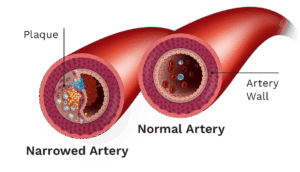
- Narrowing or blockages in your coronary arteries
- Plaque buildup, including both soft and calcified plaque
- The overall structure and function of your heart and major blood vessels
You may need a CCTA if you have:
- Chest pain, pressure, or shortness of breath
- An abnormal or unclear stress test
- A family history of heart disease
- Risk factors like high cholesterol, high blood pressure, diabetes, or smoking history
This exam helps determine the cause of your symptoms and whether you may need more testing or treatment.
How to Prepare for Your CCTA
Preparing for your Coronary CT Angiogram helps us capture the best possible images:
- Wear comfortable clothing and remove jewelry or anything metal.
- Tell us if you may be pregnant, if you are breastfeeding, or if you have kidney concerns or a past reaction to contrast dye.
- If your resting heart rate is over 75 beats per minute, you will be instructed to take a beta blocker medication to lower your heart rate to ensure better image quality.
You should receive specific instructions from your referring provider. Learn more about our Beta Blocker protocol below.
What Happens During the Exam
Here’s what you can expect during your CCTA at DINW:
- You’ll change into a gown and lie on the CT table.
- Small sticky patches (electrodes) are placed on your chest to track your heartbeat.
- Nitroglycerin will be given as a sublingual tablet or spray (under the tongue) for fast absorption. This helps widen the coronary arteries, making it easier to take high quality images of them.
- An IV is placed in your arm to give you contrast dye. A warm feeling during the contrast injection is normal.
- You may be asked to hold your breath for about 10 seconds while the scanner takes pictures.
The scanning itself takes only a few minutes. Most patients are done in about 20–30 minutes from start to finish.
After Your CCTA
You can return to normal activities right away unless your doctor says otherwise. Drinking water helps flush the contrast dye from your body.
A board-certified TRA cardiac trained radiologist will review your images carefully and send a detailed report to your doctor. Your provider will then discuss the results with you and explain any next steps.
HeartFlow Analysis for More Detailed Heart Information
For some patients, Diagnostic Imaging Northwest may also provide a HeartFlow Analysis (FFR-CT) using your CCTA images. This advanced analytical software uses flow dynamics to show how blood flows through your coronary arteries and helps your doctor understand if any narrowing is limiting blood supply to your heart.
If needed, HeartFlow Plaque Analysis can measure the amount and type of plaque in your arteries, giving your doctor more information to personalize your care.
Why choose DINW for your CCTA?
At Diagnostic Imaging Northwest, you can expect:
- Advanced CT and post processing technology designed for heart imaging
- Clear communication and supportive staff
- A comfortable, patient-centered experience
- Radiologists with specialized fellowship training in cardiac imaging
- Close coordination with your referring provider
We know that having a heart test can feel overwhelming. Our team is here to guide you, answer your questions, and make your visit as smooth as possible. Your heart health matters, and we’re here to help you feel confident and informed every step of the way.
-
FFR-CT
-
A heart attack shouldn’t be the first sign of heart disease. CCTA + FFR-CT gives a more comprehensive5 view of your heart’s health, allowing for more informed decision making for you and your physician.6,7
DINW is advancing the assessment of your heart health with advanced analysis. Using images from your coronary CTA, this AI-enabled heart test provides a personalized 3D model of your coronary arteries that shows how disease may be impacting blood flow to your heart, as well as identifying the amount, location, and type of plaque present. This detailed information helps you and your doctor better understand the severity of your disease and determine a personalized treatment plan.6,7
Why a CCTA + FFR-CT?
- Non-Invasive: FFR-CT is a technology that uses images from your heart scan, so no invasive tests or anesthesia are needed.
- Accurate: FFR-CT has demonstrated superior accuracy in diagnosing CAD7,8 and is clinically proven to align with results from more invasive tests.9
- Personalized: FFR-CT builds a personalized, 3D model of your arteries, using images already taken during your heart scan.
- Comprehensive: FFR-CT can go beyond calcium scoring by identifying higher risk plaques that are most likely to cause a cardiac event.5
- Guides Treatment Decisions: FFR-CT identifies how much and what type of plaque is present in your arteries and measures any blockages that could be limiting blood flow to your heart, providing information to help guide your personalized treatment plan.6,7
How It Works
- Scan: Your doctor will order a non-invasive Coronary CTA (CCTA) scan of your heart to look for disease.
- Measure: If there is at least mild stenosis (>30%) of one of the major coronary arteries, then the CCTA Would qualify to potentially be a candidate for advanced analysis. Using your scan, the images undergo advanced AI processing to generate a personalized, 3D model of your arteries. Your report will measure blood flow and plaque buildup in your coronary arteries.
- Act: Your doctor receives a personalized, color-coded 3D model of your coronary arteries and detailed insights about your heart. With all the information in hand, you and your provider can make an informed choice on the best treatment pathway for you.5,6
For more information or to schedule an appointment, call 253-841-4353.
Citations:
- Heart Disease Facts. CDC. Accessed December 18, 2024. https://www.cdc.gov/heartdisease/data-research/facts-stats/index.html
- Heart Attack. CDC. Accessed December 18, 2024. https://www.cdc.gov/heart-disease/about/heart-attack.html
- 2010 ACCF/AHA Guideline for Assessment of Cardiovascular Risk in Asymptomatic Adults Circulation. November 2010.
- Preventing myocardial infarction in the young adult in the first place: how do the national cholesterol education panel iii guidelines perform? Journal of the American College of Cardiology. May 2003.
- Williams MC, et al. Circulation. 2020. doi: 10.1161 CIRCULATIONAHA.119.044720
- Rinehart S, et al. JSCAI. 2024. doi: 10.1016/j.jscai.2024.101296
- Douglas PS, et al. The PRECISE Randomized Clinical Trial. JAMA Cardiol. 2023;8(10):904–914. doi:10.1001/jamacardio.2023.2595
- Driessen, et al. J Am Coll Cardiol 2019; Norgaard, et al, Euro J Radiol 2015.
- Narula J, et al. Eur Heart J. 2024. doi: 10.1093/ehjci/jeae115
-
Plaque Analysis
-
For some patients, Diagnostic Imaging Northwest can offer Plaque Analysis along with a FFR-CT study. This advanced tool uses your CCTA images to measure how much plaque is inside your coronary arteries and identify what type of plaque is present.
Plaque may be:
-
Calcified plaque (hard plaque)
-
Non-calcified plaque (soft plaque)
-
Mixed plaque (a combination of both)
Knowing what kind of plaque is in your arteries helps your doctor understand your risk level and create a care plan that fits your needs.
Plaque Analysis produces a detailed, color-coded map of your arteries that shows:
-
Where plaque is located
-
How much plaque has built up
-
What type of plaque is present
-
Whether plaque may affect blood flow
-
How plaque changes over time if you are monitored regularly
This information is combined with your CCTA and FFR-CT findings to give your heart team a complete picture of your coronary health.
Who Is an Ideal Candidate for Plaque Analysis?
Plaque Analysis is most helpful for people who need more detail than a standard CCTA alone can provide. You may be a good candidate if:
-
Your CCTA shows plaque, and your doctor wants to understand the type of plaque more clearly
-
You have multiple risk factors for heart disease, such as high cholesterol, high blood pressure, diabetes, smoking history, or a strong family history
-
You have chest pain or shortness of breath, but previous tests were unclear
-
Your doctor wants to track how your plaque changes over time, especially if you are starting new medications or lifestyle changes
-
You are trying to avoid an invasive procedure unless it is truly necessary
Plaque Analysis is a helpful tool for both diagnosis and long-term planning, giving your doctor more information to guide treatment and support your heart health.
-
-
Beta-Blockers, Nitroglycerin, and Your Coronary CT Angiogram (CCTA)
-
To get the clearest possible pictures of your coronary arteries, your heart needs to beat at a steady, slower rate during the scan. Beta-blockers are commonly used to help with this. They work by gently lowering your heart rate so the scanner can capture detailed images with less motion.
Why Beta-Blockers Are Used
Beta-blockers are considered first-line medications for safely achieving this short-term heart rate reduction. Beta blockers can also provide the benefit of making an irregular heart rhythm more regular. Having high heart rate and/or irregular rhythm increases the chance of a coronary CTA having non-diagnostic segments of the coronary arteries, which may reduce confidence in the results of the exam.
Why Nitroglycerin is Used
Sublingual Nitroglycerin is a fast acting medication that acts on blood vessel wall receptors to temporarily dilate blood vessels. By mildly dilating the coronary arteries, areas of stenosis or blockage become more apparent.
How the Medication is Given
Your care team may prescribe beta-blockers for you to take before your appointment. The dosing depends on your heart rate, and the timing helps ensure the medication is fully active when you arrive for your scan. According to the patient preparation protocol:
-
You may be asked to take a dose the night before your exam if your resting heart rate is 65 bpm or higher.
-
On the day of your exam, you will typically take another dose a couple of hours before your scan based on your heart rate that morning.
-
We may ask you to bring an additional tablet with you in case another dose is needed at check-in.
-
The medication is usually taken by mouth, and most patients tolerate it well.
You will receive two sublingual nitroglycerin tablets that will be dropped under the tongue to dissolve. If you have dry mouth or there is delay in having the tablets dissolve, a small amount of water may be given to help them dissolve.
What to Expect
Beta-blockers begin working fairly quickly. You may notice your heart rate slowing or feel more relaxed. This is normal. Your technologist will check your heart rate when you arrive and let you know if anything else is needed before moving ahead with the scan.
The quick acting sublingual nitroglycerin will wear off in about 15 minutes. Approximately half of patients experience a mild self resolving headache from the nitroglycerin.
After Your Exam
Once your study is complete, you can return to normal activities unless your provider gives other instructions. Drinking plenty of water for the rest of the day is recommended.
Have Questions?
Patients who have been prescribed beta blockers are encouraged to contact their referring provider with any additional questions about the medication.
-
-
Frequently Asked Questions
-
Do I need a referral for a Coronary CT Angiogram?
Yes. A referral from your provider ensures that a CCTA is the right test for you.How long does a CCTA take?
Most patients are in and out in about 20–30 minutes. The scan itself only takes a few seconds.Can I drive home after the exam?
Yes. You can return to normal activities right away unless your doctor gives you other instructions.Will I need contrast dye?
Yes. A small amount of contrast dye helps show your coronary arteries clearly.Is CCTA the same as a calcium score?
No. A calcium score looks only for calcified plaque. A CCTA shows both soft and calcified plaque and gives detailed pictures of the coronary arteries.